Velimela, West Hyderabad — A Buyer's Guide to the New Growth Corridor

Velimela is one of the fastest growing areas in West Hyderabad today. Velimela has grown from a farming village into a developing residential pocket in West Hyderabad. Better road access and new housing projects have increased demand. The 502300 pin code is now linked with a fast growing suburban zone, and the population jump by 2026 reflects this steady transformation.
What was once a quiet village with farms and open land is now part of the growing residential belt near Tellapur and Kollur. With strong road access and proximity to the IT corridor, Velimela has slowly changed from rural to urban in the last two decades.
For many years, it was just a small village on the edge of Hyderabad. People here lived simple lives. Farming was common. Open fields stretched far. The air felt cleaner. The city noise stayed far away. While areas like Gachibowli and Kondapur were filling up with tech parks and apartments, Velimela stayed slow and steady.
Then the Outer Ring Road changed the story. ORR Exit 2 made travel easy. What once felt far suddenly felt close. The drive to the Financial District became smooth. Neopolis was within reach. People started looking at Velimela in a new way. Not as a village. But as the next place to live.
The land here was still open. Roads were wider. There was space to plan properly. That is why big builders showed interest. Projects like Prestige Golden Grove reflect this shift. Instead of cramped blocks, these layouts focus on green space and light. Buyers liked that. They wanted calm but not isolation.
New families moved in gradually. Many are employed in technology. Some are entrepreneurs. Some are long-term value investors. They brought with them everyday services, modest shops, and improved roads. The mix of social groups started to shift. Although the village roots are still present, the atmosphere has changed.
In 2026, Velimela stands between two worlds. It remembers its farming past. At the same time, it is stepping into a modern future. It is not loud. It is not chaotic. It feels like a quiet stretch that is waking up, one project at a time.
| Category | Details |
|---|---|
| Location | West Hyderabad, under Sangareddy district, Telangana |
| Historical Background | Earlier a quiet farming village known for red and black soil cultivation and small local communities |
| Administrative Status | Now falls under HMDA planning limits |
| Nearby Hubs | Kollur (6 km), Tellapur (10 km), Gachibowli (20 km) |
| Growth Trigger | ORR Exit 2 improved access to the IT corridor |
| Pin Code | 502300 |
| Pin Code Coverage | Velimela village, Kollur Road layouts, parts of Osman Nagar |
| Population in 2020 | ~1,200 residents |
| Population in 2026 | ~8,500 residents (estimated) |
| Growth Pattern | Rapid rise due to gated communities and better connectivity |
Local Profile: Administrative & Geographic Data
Velimela is changing fast. It was once a small gram panchayat village. Now it falls under HMDA limits. That means better planning. Roads, layouts, and new projects follow city rules. This shift is important for buyers and investors.
Velimela comes under Sangareddy district in Telangana. It is linked to the Patancheru and Ramachandrapuram side for local administration. On paper, it still has village roots. But on ground, the area feels more urban each year.
Its worth is increased by nearby locations. About 6 miles separates Kollur. It's around 10 km to Tellapur. Nearly 20 kilometers away lies Gachibowli, a significant IT hub. These distances allow for stress-free everyday travel.
Connectivity is simple and clear. ORR Exit 2 gives direct access to key parts of Hyderabad. NH 65 also helps with smooth road travel. Because of these roads, Velimela does not feel cut off. It feels connected, active, and ready for steady growth.
Pin Code
The 502300 pin code now covers more than just a small village address. It includes Velimela and the fast growing layouts along Kollur Road. Parts of Osman Nagar also fall under this same code. Over the past few years, this number has started to appear in many new home registrations and property listings.
The pin code is more important to locals than most people realize. It determines courier reach, postal service, and even how the area is mapped by web platforms. Delivery services have also been quicker and more frequent in this area as more families move into gated communities and high-rise residences.
502300 is presently considered an active service zone by meal delivery services, grocery applications, and e-commerce companies. What was once a quiet rural code now supports modern living needs. In 2026, this pin code clearly reflects the shift of Velimela from farmland roots to a well connected West Hyderabad address.
Population as of 2026
~8,500 Residents (Estimated)
In 2020, Velimela was still a small village with close to 1,200 people. Most families had lived there for years. The area felt quiet and open. There were fewer houses and very little traffic.
The situation is drastically different by 2026. Currently, the population is thought to be at least 8,500. In just six years, there was a significant increase. A major factor in this shift was the emergence of new gated communities. A large number of IT sector working professionals began relocating here. They desired a cleaner environment and more room.
Projects like Prestige Golden Grove Tellapur also created strong interest even before full completion. The buzz around such developments brought buyers and investors early. This growth shows how fast Velimela is shifting. It is no longer a small farming pocket. It is becoming a busy residential zone on the edge of West Hyderabad.
Agrarian Beginnings: The Legacy of the Land
Velimela started as farming land. The soil here is mostly red and black. Farmers liked this soil. It worked well for crops. People grew paddy, maize, and local vegetables. Work began early in the day. Life followed the rain. Good monsoon meant good income.
Many families in the Velimela and Kondakal stretch have tilled the same plots for years. Land passed from parents to children. It was not just for money. It gave food, work, and a sense of place. Festivals and village fairs often marked the harvest season.
Water made a big difference. Small lakes and natural low areas stored rainwater. These helped fields stay moist even after the rains slowed down. Before factories grew near Patancheru, this belt was known more for crops than concrete. Even now, if you look closely, you can still spot bits of that farming past around the edges of Velimela.
The Industrial & Infrastructure Catalyst
Velimela's modern phase started around 2008. This was when HMDA was formed and city planning began to expand outward. At the same time, the Outer Ring Road was being planned. These two steps slowly changed how people looked at this area.
Nearby villages saw land allotments to APIIC. Industrial plots brought early road work and basic upgrades. Trucks and workers started using these routes. Small roads became wider. Access improved year by year.
The biggest shift came with the ORR. Once the road became active, travel time dropped sharply. Gachibowli could be reached in about 20 minutes on a clear stretch. That changed the mindset. Velimela no longer felt far from the IT zone. It felt connected.
Distance on the map stayed the same. But the time to reach key hubs reduced. That made all the difference.
The Industrial & Infrastructure Catalyst
Velimela's modern phase started around 2008. This was when HMDA was formed and city planning began to expand outward. At the same time, the Outer Ring Road was being planned. These two steps slowly changed how people looked at this area.
Nearby villages saw land allotments to APIIC. Industrial plots brought early road work and basic upgrades. Trucks and workers started using these routes. Small roads became wider. Access improved year by year.
The biggest shift came with the ORR. Once the road was functioning, travel time significantly decreased. On a clear stretch, the trip to Gachibowli would take around twenty minutes. That altered the perspective. Velimela felt a member of the IT department instead of being isolated from it. The map's distance stayed the same. However, it took less time to get to important centers. That was the primary distinction.
Real Estate Renaissance: The Entry of Trusted Brands
Around 2024, you could feel the shift on ground. Boards went up. Site visits increased. Cars with out of area numbers started coming in on weekends. Till then, most deals here were about buying a plot and holding it. People would fence the land and wait for prices to move.
By 2025, that mood had changed. Instead of empty layouts, you could see cranes and boundary walls for bigger projects. Developers no longer only sold land. They were constructing entire residences with common areas, parking, and elevators. Resale was no longer the main consideration for families. They intended to make this their home.
Velimela's appearance changed as a result of the modification. It was no longer a wager on the future. In front of you, it began to seem like a place that was truly expanding.Developers moved from basic layouts to planned high rise homes with better design and shared spaces. This gave the area a new identity.
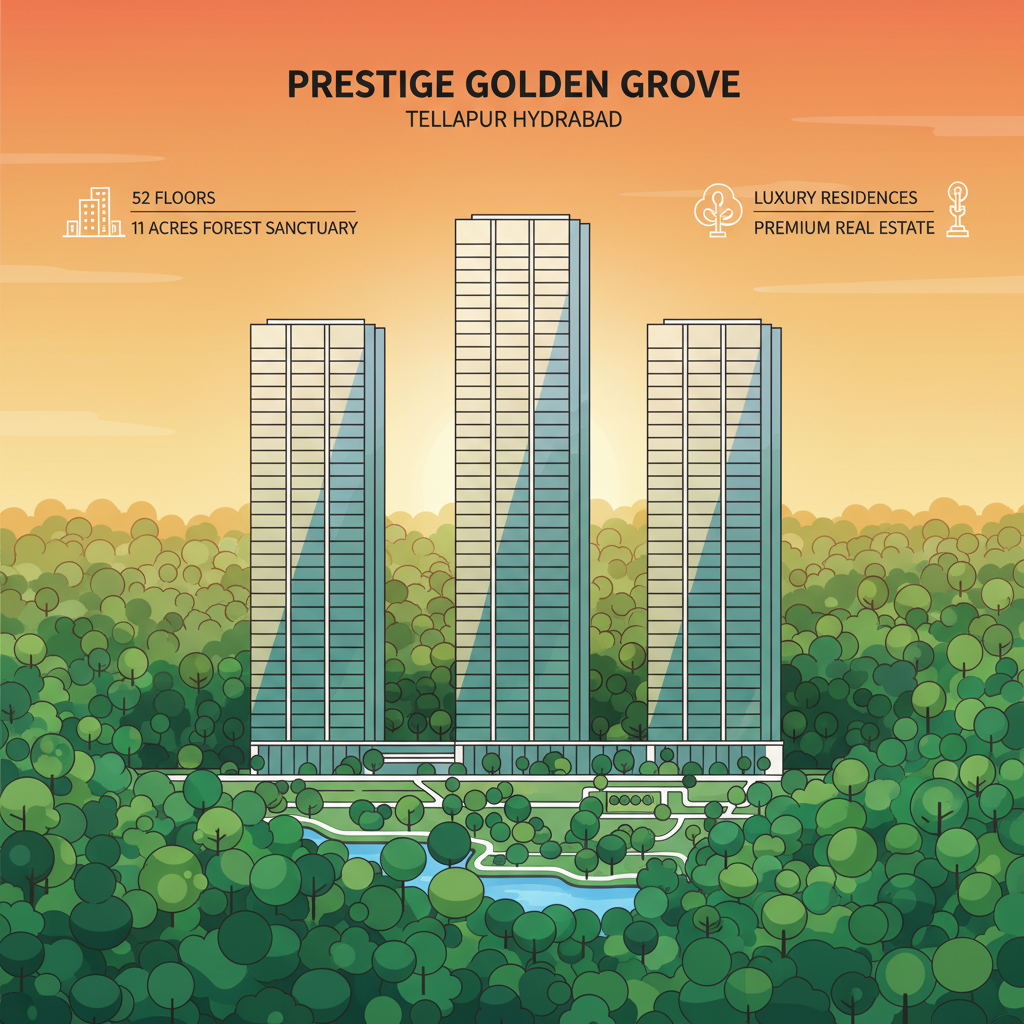
A major turning point was the launch of Prestige Golden Grove. That project brought strong attention from serious buyers. NRIs and long term investors started tracking Velimela closely. With branded development entering the picture, the area began to be seen as a prime residential zone rather than a fringe location.
Future Outlook: The Future City Connection
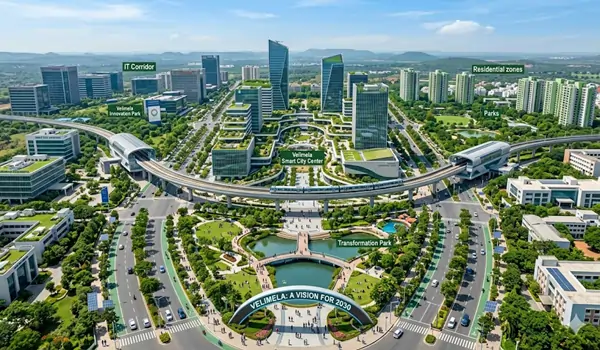
Velimela sits along the stretch linked to the proposed Future City plan of Hyderabad. Because of this, many buyers see long term scope here. Growth is expected to move outward, and Velimela falls in that path.
Another factor is the planned Regional Ring Road. Once the RRR becomes active, outer connectivity will improve again. Better highways usually push land demand higher. Investors are already watching this closely.
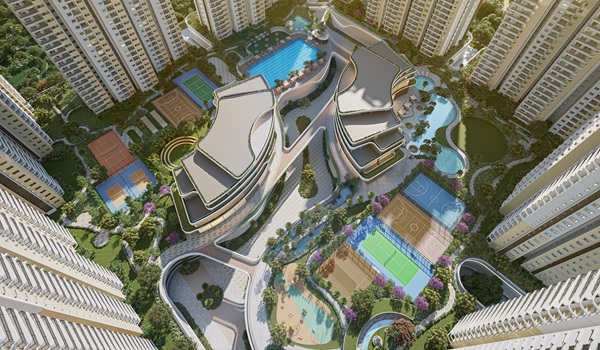
Even with growth coming in, the area still holds open land. New townships are keeping large green parks inside their layouts. This helps balance buildings with breathing space. Velimela still seems open, unlike more populated areas of the city. Its future attractiveness is shaped by this combination of open space and accessibility.
Conclusion
Velimela remained silent. It grew slowly. It was only farmland, little houses, and old faces for a long time. People were acquainted. Life went at its own pace. Then the roads became better. Everyday travel was made easier by the Outer Ring Road. What had seemed remote began to seem doable.
The 502300 pin code now shows up on new house keys and delivery apps. That small detail says a lot. More families have moved in after 2020. By 2026, the rise in population is easy to see. You notice more lights at night. More cars in the morning.
Velimela hasn't yet become a crowded city block. New buildings are next to open patches. It is uncommon to find such equilibrium. When one looks at West Hyderabad now, Velimela seems calm, sensible, and quietly certain of what lies ahead.
Frequently Asked Questions
Q1. Where is Velimela located in Hyderabad?
Velimela is in the western part of Hyderabad. It comes under Sangareddy district in Telangana. The area sits close to Tellapur, Kollur, and the Financial District.
Q2. What is Velimela's pin code?
Velimela's pin code is 502300. Parts of Osman Nagar and adjacent expanding residential schemes along Kollur Road are also covered by this code.
Q3. How far is it from Gachibowli to Velimela?
Gachibowli is around 20 miles from Velimela. Depending on traffic, the travel with ORR access often takes 20 to 30 minutes.
Q4. What was Velimela known for earlier?
Earlier, Velimela was mainly an agricultural village. Farming was the main activity, supported by red and black soil and nearby water bodies.
Q5. What is the population of Velimela in 2026?
As of 2026, the estimated population is around 8,500 residents. The number has grown quickly in the past few years.
Q6. Why is Velimela growing fast now?
Better road access, especially through the Outer Ring Road, has improved connectivity. New gated communities have also increased demand.
Q7. Is Velimela under HMDA limits?
Yes, Velimela now falls under HMDA planning limits. This supports structured development and layout approvals.
Q8. Is Velimela good for long term investment?
Many buyers see potential due to connectivity, open land, and ongoing residential projects. Growth has been steady, making it a watched location in West Hyderabad.
Who Should Buy in Velimela — and Who Should Skip
| Right fit | Better off elsewhere |
|---|---|
| IT professionals seeking the Financial District / Gachibowli / Neopolis catchment at ~40% lower pricing. | Office-goers anchored to East Hyderabad — daily drag exceeds the saving. |
| Families needing operational K-12 (Gaudium 0.9 km, Oakridge, Glendale, CHIREC). | Households without school constraints who can absorb older inner-city ticket sizes. |
| NRIs wanting branded inventory in a corridor with two confirmed infrastructure triggers. | Investors needing locked-in rental from day one (handover is 2031). |
| End-users on a 4–6 year horizon willing to absorb pre-launch construction risk for ~10% pricing advantage. | Buyers needing keys inside 18–24 months. |
| HNIs deploying Rs 1.5–3 Cr into 3/4 BHK branded inventory for capital preservation. | Buyers with zero tolerance for ticket-size drift over a 5-year construction window. |
Risk vs Reward — Reading Velimela Honestly
| Reward signal | Risk to underwrite |
|---|---|
| ~40% pricing gap to Neopolis–Kokapet on the same employment catchment. | Pre-launch ticket size can drift 8–12% upward at handover. |
| Two infrastructure triggers — Metro Phase 2 (2028–2030) and RRR — both on schedule. | Either project slipping 18+ months pushes the sharpest appreciation curve into the post-handover window. |
| 15–18% historical resale premium for branded inventory. | Macro IT-spend slowdown compresses 2 BHK yields first; larger units are more resilient. |
| 3,500-acre ICRISAT sanctuary protects the western view via land-use, not goodwill. | Northern and eastern flanks remain open to future high-rise development; tower-facing matters at booking. |
| Settled K-12 and healthcare clusters remove the "education-risk" premium in resale. | 5,120-unit-scale CAM runs Rs 4–6 / sq. ft. / month vs Rs 2.50–3.50 for boutique projects. |
Where Velimela Goes Next — Beyond Basic Connectivity
- Catchment compression after Metro Phase 2. Velimela-to-HITEC City door-to-door drops to ~35 minutes once the Red Line lands at Nagulapalli — closer than a peak-hour drive from inner Madhapur today.
- Commercial absorption pull. Neopolis–Kokapet's 18M+ sq. ft. of Grade-A office leases is the appreciation runway — residential demand lags commercial by 24–36 months in Hyderabad.
- RRR rewires inter-city traffic. Velimela shifts from "edge of city" to "well-connected mid-city" without any project-side change.
- Settled K-12 cluster. No "education-risk premium" in resale — schools are operational, not announced.
- Healthcare infill on the Tellapur–Nallagandla stretch. Two further multi-speciality additions are slated within 24 months.
- Capital rotation from saturated pockets. HNI capital is rotating from inner Madhapur (Rs 14,000+ psf) into the Velimela arc for entry inventory.
How Velimela Compares to Other West Hyderabad Pockets
- Land area > 25 acres vs < 5 acres. Larger plots keep towers far enough apart for genuine view privacy.
- Direct ORR exit vs internal-road approach. A 2-minute service-road run beats 15–20 minutes through inner Tellapur lanes on busy mornings.
- Settled vs promised infrastructure. Operational schools and hospitals beat brochure-only commitments — material for resale and rental defensibility.
- View by land-use vs by goodwill. The ICRISAT-protected boundary locks in the view permanently; an empty neighbouring plot does not.
- Newer arterial standards. Right-of-way norms used in last-decade roads here are wider and better-drained than the 1990s inner-city grid.
Blog
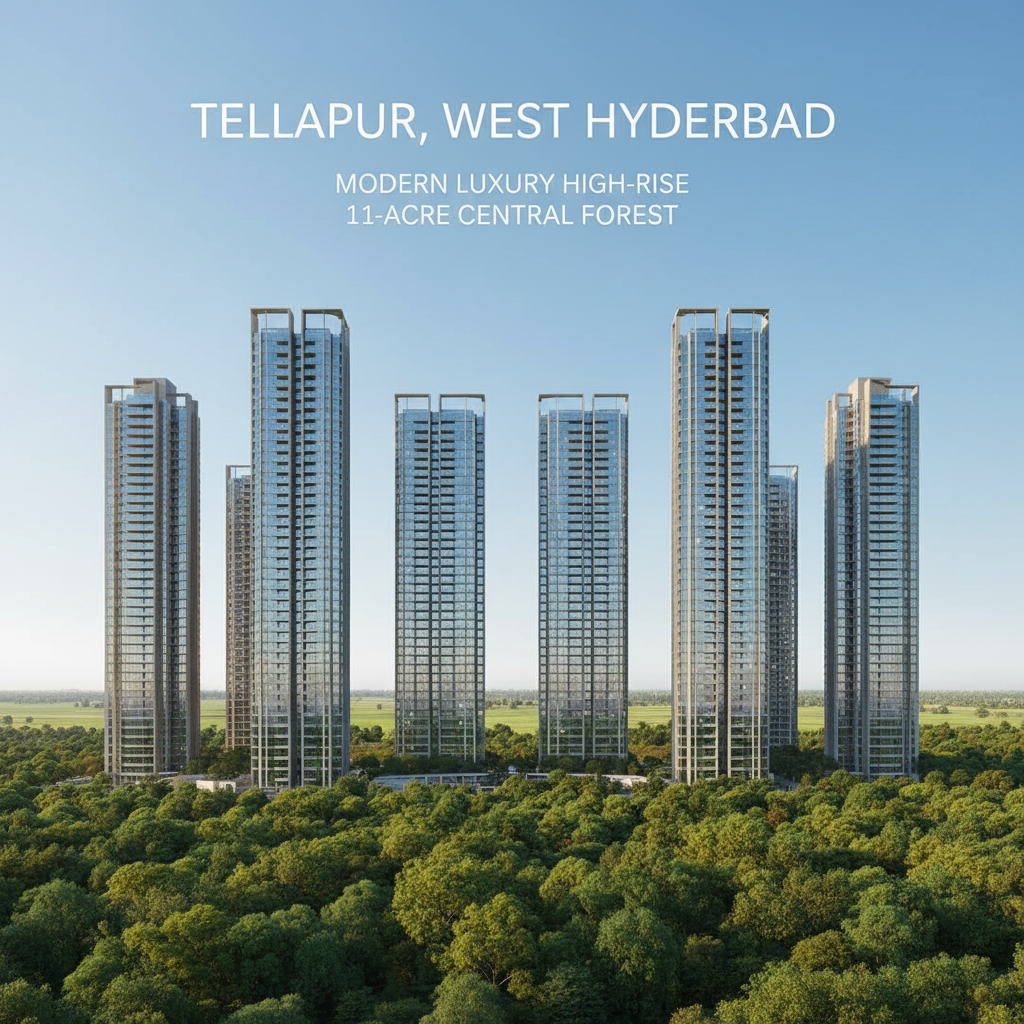
2 BHK Apartment in Velimela Hyderabad
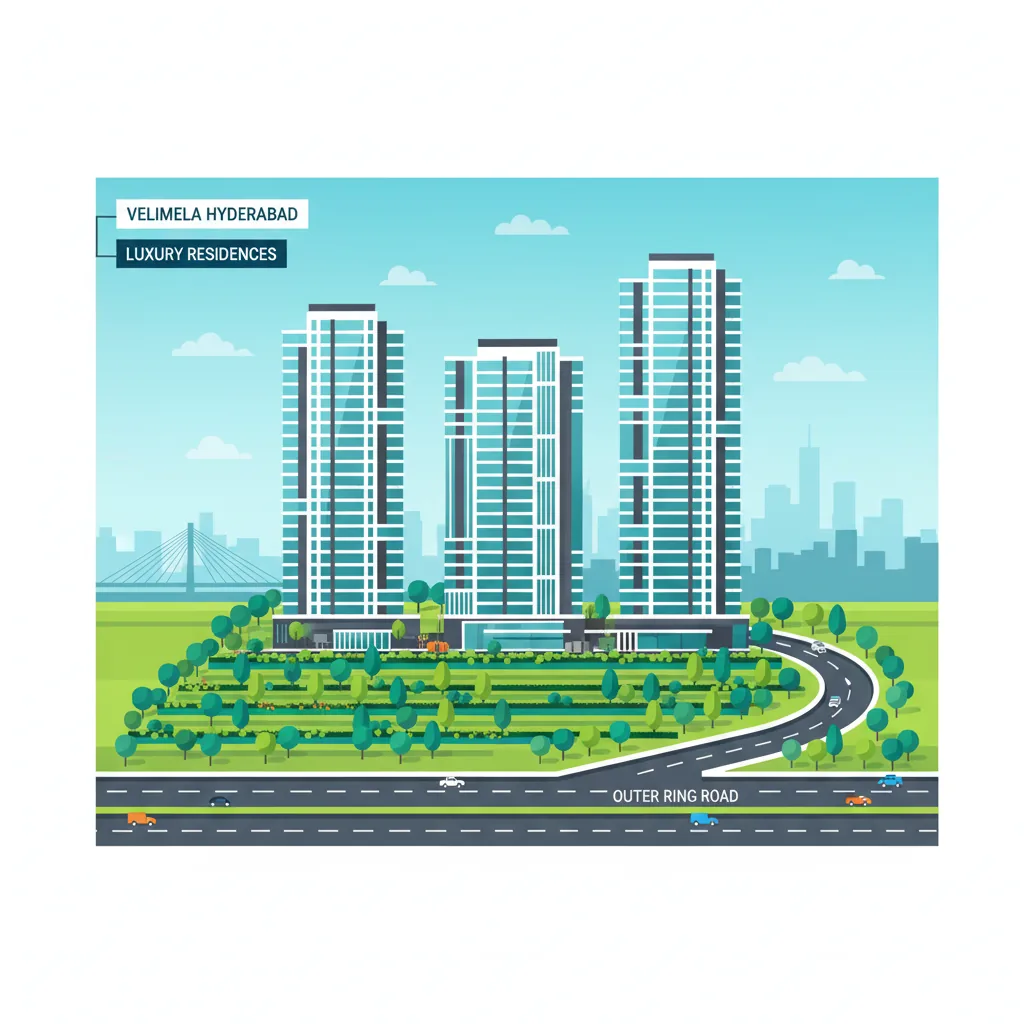
Apartments in Velimela for Sale
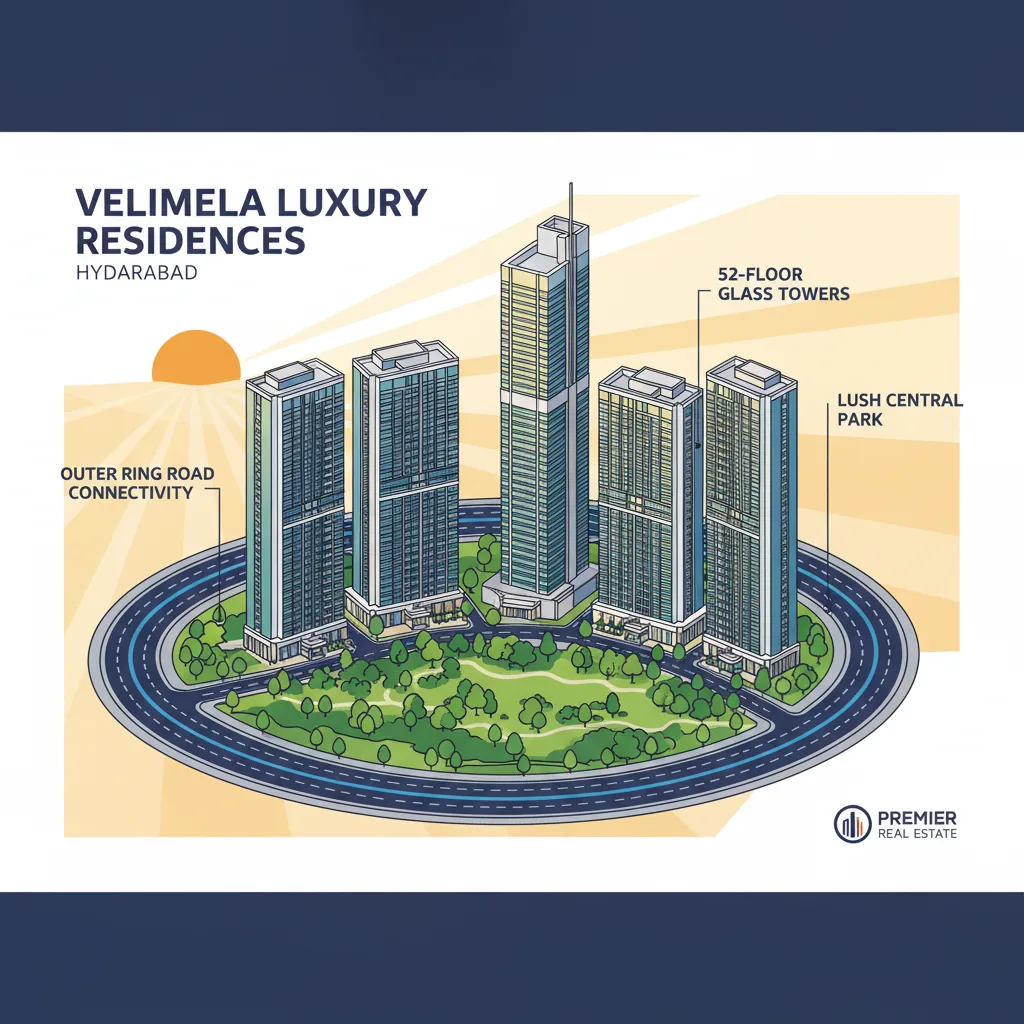
Apartments in Velimela, Hyderabad
Best Apartment in Velimela
Best Township in Velimela
Biggest Township in Velimela

Flats for Sale in Velimela, Hyderabad

Is Velimela a Good Place to Live?
Is Velimela The New Posh Hub Of West Hyderabad 2026 Location And Safety Guide

Prestige Golden Grove
New Launch Apartment Velimela
Pre-Launch Apartment in Velimela

Prestige Apartment in Velimela 2026 for Sale

Prestige Apartment in Velimela 2026 Price List
Prestige Apartment in Velimela Hyderabad

Prestige Apartment in Velimela 2026 Price

Prestige Velimela Hyderabad
Velimela 2030

The Velimela Insider

Velimela Apartment and Land for Sale Price and Rent

Velimela Distance to Tellapur, Gachibowli and Financial District

Velimela West Hyderabad Real Estate Boom and Property Prices


